Structural, Behavioral, and Flow Diagrams: Definitions, Examples, and Visualization Code
Jifeng Wu
560 words
5 mins
Structural, Behavioral, and Flow Diagrams: Definitions, Examples, and Visualization Code
Structural Diagrams
Structural diagrams show the structure or organization of an entity - how components are arranged and related - rather than events or interactions.
Mind Map
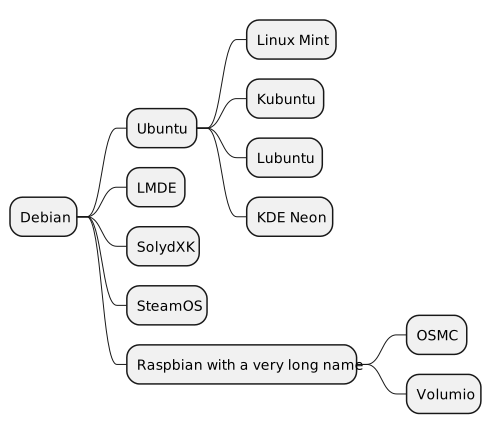
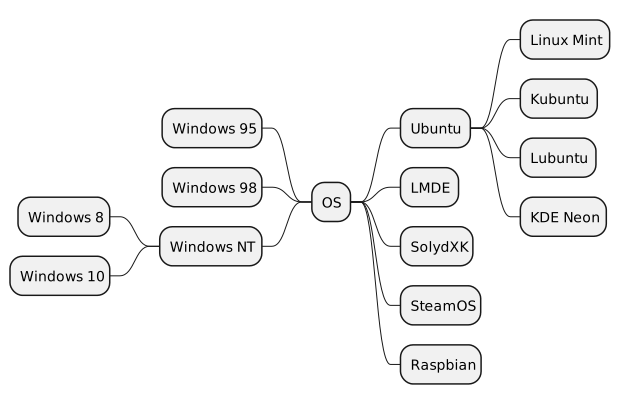
A mind map is a hierarchical diagram that visually organizes ideas, tasks, or concepts, typically radiating from a central theme.
PlantUML
1
2
3
4
5
6
7
8
9
10
11
12
13
14
@startmindmap
* Debian
** Ubuntu
*** Linux Mint
*** Kubuntu
*** Lubuntu
*** KDE Neon
** LMDE
** SolydXK
** SteamOS
** Raspbian with a very long name
*** OSMC
*** Volumio
@endmindmap
1
2
3
4
5
6
7
8
9
10
11
12
13
14
15
16
17
@startmindmap
+ OS
++ Ubuntu
+++ Linux Mint
+++ Kubuntu
+++ Lubuntu
+++ KDE Neon
++ LMDE
++ SolydXK
++ SteamOS
++ Raspbian
-- Windows 95
-- Windows 98
-- Windows NT
--- Windows 8
--- Windows 10
@endmindmap
Work Breakdown Structure Diagram
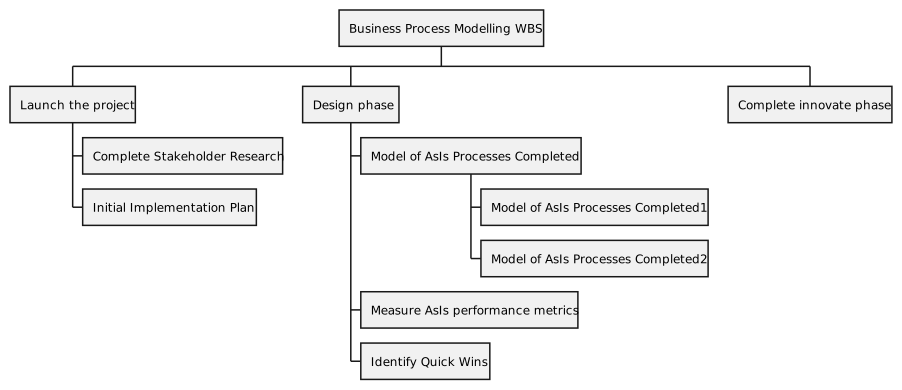
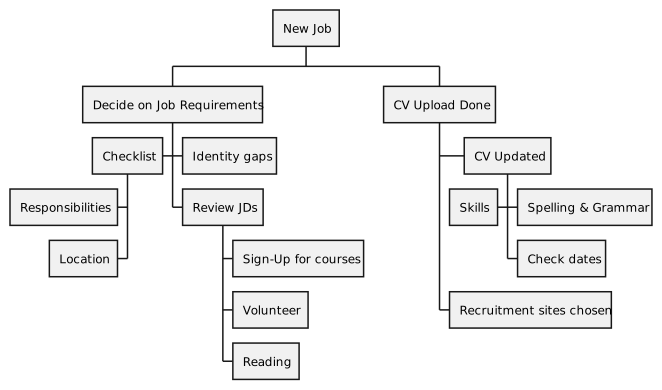
A work breakdown structure diagram breaks down a goal or project into manageable parts or tasks in a hierarchical structure, making it easier to see how work is organized.
PlantUML
1
2
3
4
5
6
7
8
9
10
11
12
13
@startwbs
* Business Process Modelling WBS
** Launch the project
*** Complete Stakeholder Research
*** Initial Implementation Plan
** Design phase
*** Model of AsIs Processes Completed
**** Model of AsIs Processes Completed1
**** Model of AsIs Processes Completed2
*** Measure AsIs performance metrics
*** Identify Quick Wins
** Complete innovate phase
@endwbs
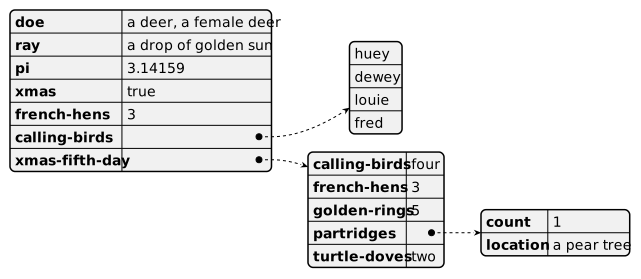
@startyaml
doe: "a deer, a female deer"
ray: "a drop of golden sun"
pi: 3.14159
xmas: true
french-hens: 3
calling-birds:
    - huey
    - dewey
    - louie
    - fred
xmas-fifth-day:
    calling-birds: four
    french-hens: 3
    golden-rings: 5
    partridges:
        count: 1
        location: "a pear tree"
    turtle-doves: two
@endyaml
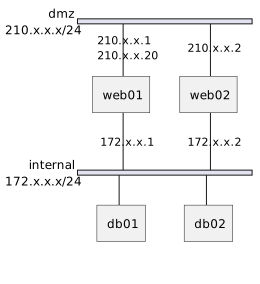
Network Diagram
PlantUML
A diagram that shows the layout and connections between components or entities in a network, such as devices or organizational units.
Behavioral diagrams illustrate the dynamic aspects of entities - how they operates and changes over time. These diagrams focus on state changes, activities, workflows and communication.
State Diagram
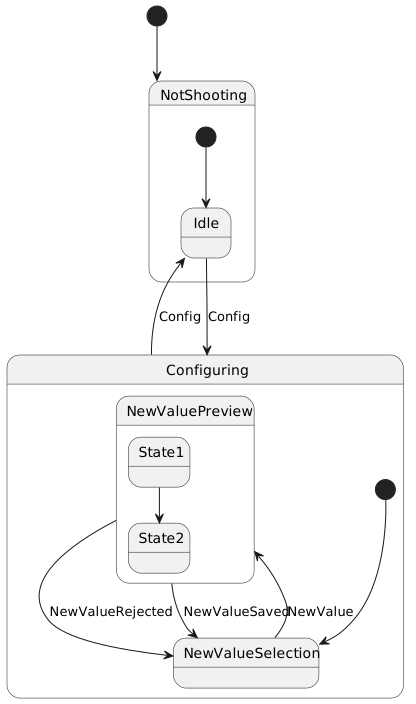
Illustrates the different states an entity can be in, and the transitions between them in response to events.
Mermaid
1
2
3
4
5
6
7
8
stateDiagram-v2
    [*] --> Still
    Still --> [*]

    Still --> Moving
    Moving --> Still
    Moving --> Crash
    Crash --> [*]
stateDiagram-v2
    [*] --> Still
    Still --> [*]

    Still --> Moving
    Moving --> Still
    Moving --> Crash
    Crash --> [*]
1
2
3
4
5
6
7
8
stateDiagram-v2
    [*] --> Active

    state Active {
        [*] --> CapsLockOff
        CapsLockOff --> CapsLockOn : CapsLockPressed
        CapsLockOn --> CapsLockOff : CapsLockPressed
    }
stateDiagram-v2
    [*] --> Active

    state Active {
        [*] --> CapsLockOff
        CapsLockOff --> CapsLockOn : CapsLockPressed
        CapsLockOn --> CapsLockOff : CapsLockPressed
    }
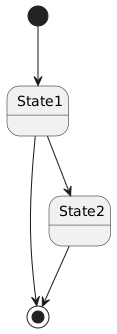
state NewValuePreview { State1 --> State2 } } @enduml
Sequence Diagram
Shows the interactions between different entities over time, emphasizing order and timing.
Mermaid:
1 2 3 4
sequenceDiagram Alice ->> John: Hello John, how are you? John -->> Alice: Great! Alice ->> John: See you later!
sequenceDiagram
Alice ->> John: Hello John, how are you?
John -->> Alice: Great!
Alice ->> John: See you later!
PlantUML:
1
2
3
4
5
6
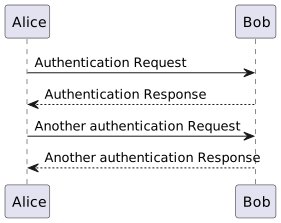
@startuml Alice -> Bob: Authentication Request Bob --> Alice: Authentication Response Alice -> Bob: Another authentication Request Bob --> Alice: Another authentication Response @enduml
Flow Chart / Flow Diagram / Activity Diagram
Charts the step-by-step actions and decisions in a process, clarifying how things progress from start to finish.
Mermaid
1 2 3
flowchart LR First -- First to Second --> Second Second -- Second to Third --> Third
flowchart LR
First -- First to Second --> Second
Second -- Second to Third --> Third
1 2 3 4 5 6
flowchart TD Start --> Is_it[Is it?] Is_it -- Yes --> OK OK --> Rethink Rethink --> Is_it Is_it -- No --> End
flowchart TD
Start --> Is_it[Is it?]
Is_it -- Yes --> OK
OK --> Rethink
Rethink --> Is_it
Is_it -- No --> End
PlantUML
1
2
3
4
5
6
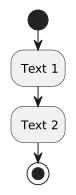
@startuml start :Text 1; :Text 2; stop @enduml
1 2 3 4 5 6 7 8 9 10 11 12 13 14 15
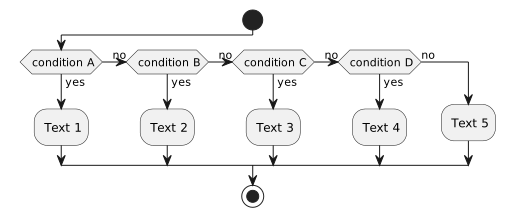
@startuml start if (condition A) then (yes) :Text 1; (no) elseif (condition B) then (yes) :Text 2; (no) elseif (condition C) then (yes) :Text 3; (no) elseif (condition D) then (yes) :Text 4; else (no) :Text 5; endif stop @enduml
1 2 3 4 5 6 7 8 9 10 11 12 13 14 15 16
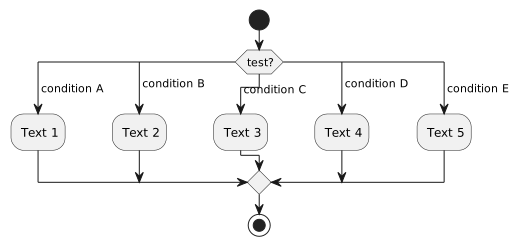
@startuml start switch (test?) case ( condition A ) :Text 1; case ( condition B ) :Text 2; case ( condition C ) :Text 3; case ( condition D ) :Text 4; case ( condition E ) :Text 5; endswitch stop @enduml
1 2 3 4 5 6 7 8
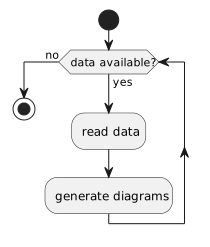
@startuml start while (data available?) is (yes) :read data; :generate diagrams; endwhile (no) stop @enduml
1
2
3
4
5
6
7
8
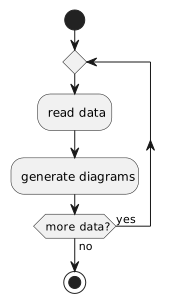
@startuml start repeat :read data; :generate diagrams; repeat while (more data?) is (yes) not (no) stop @enduml
1 2 3 4 5 6 7 8 9
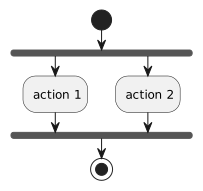
@startuml
start
fork
    :action 1;
fork again
    :action 2;
end fork
stop
@enduml